
I’ve lost count of how many times customers have asked me: “Should I make this part from aluminum or stainless steel?”
After 10+years in this business, I can tell you it’s one of the most common—and most important—decisions you’ll make. Get it right, and your part performs perfectly for years. Get it wrong, and you’re looking at corrosion, weight issues, or unnecessary costs.
Whether you’re designing for aerospace, medical devices, or industrial equipment, this guide will help you make the right call. And if you’re looking for CNC machining services that know how to handle both materials, we’ve got you covered.
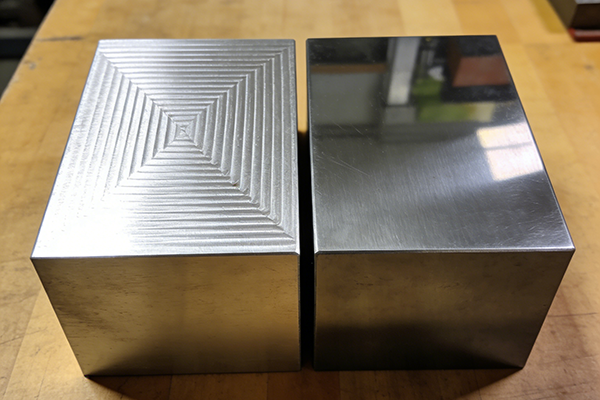
The Short Version: What You Need to Know
Before we dive deep, here’s the quick takeaway:
| Factor | Aluminum | Stainless Steel |
|---|---|---|
| Weight | Light (1/3 of steel) | Heavy |
| Strength | Good strength-to-weight | Much stronger overall |
| Corrosion | Naturally resistant | Excellent (especially 316) |
| Machining | Fast, easy, low tool wear | Slower, tougher on tools |
| Cost | Lower material + machining | Higher all around |
| Best for | Weight-sensitive, heat dissipation | Harsh environments, high stress |
What's the Difference? A Real-World Look
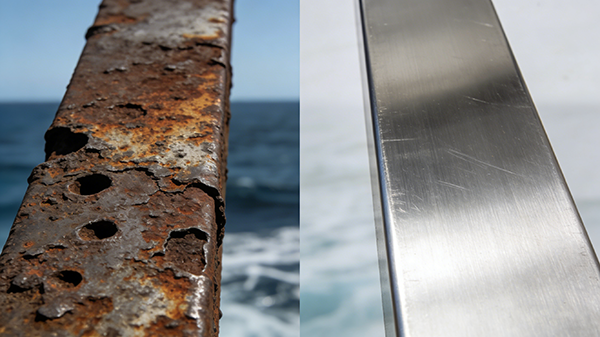
Let me share something I learned the hard way. Early in my career, a client designed a marine component using aluminum 6061. Looked great on paper. Six months later, we got an angry call—the part had pitted badly in saltwater. Should’ve been stainless 316.
That’s the kind of mistake you only make once. Here’s what actually matters when choosing.
Aluminum: The Lightweight Performer
Aluminum is everywhere in manufacturing. Grades like 6061 and 7075 are workhorses for good reason.
What aluminum does well:
Weight savings: About one-third the weight of stainless steel. If your part flies, moves, or gets carried by hand, this matters.
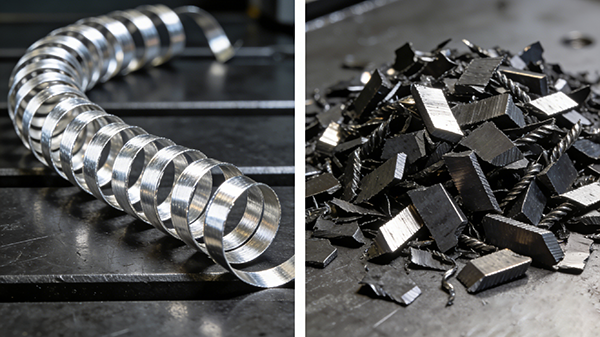
Machinability: Aluminum cuts like butter compared to stainless. We can run machines faster, tools last longer, and cycle times are shorter. That translates directly to lower cost.
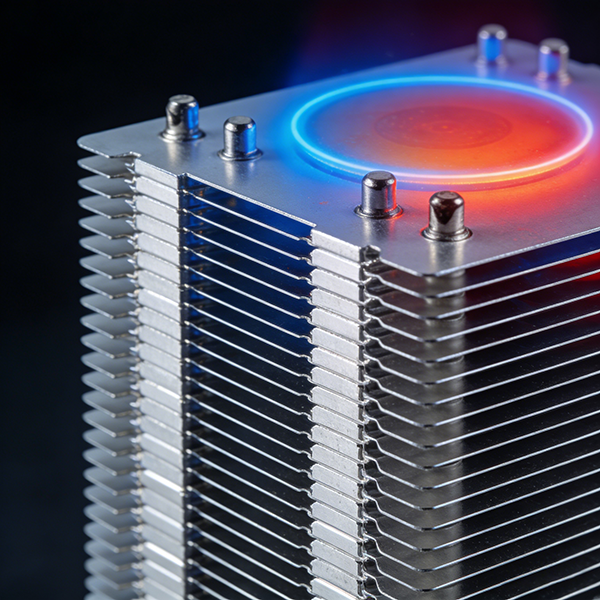
Thermal conductivity: Aluminum moves heat about 10 times better than stainless. If you’re making heat sinks or parts that need to dissipate thermal energy, aluminum wins.
Surface options: Anodizing gives you color choices and added protection. Want your parts red, blue, or black? Aluminum can do that.
Where aluminum struggles:
Strength: Stainless is roughly three times stronger. If your part takes heavy loads or impacts, keep reading.
Threads: Aluminum threads strip easier. We often recommend thread inserts for anything that gets taken apart repeatedly.
Heat resistance: Aluminum softens at much lower temperatures. Not your choice for exhaust components or high-heat applications.
Stainless Steel: The Tough Choice
Stainless comes in many grades, but 304 and 316 are what we machine most often.
What stainless does well:
Strength and durability: This stuff is tough. It handles impacts, heavy loads, and high stress without complaint.
Corrosion resistance: Especially 316 with its molybdenum content. Marine environments, chemical processing, food equipment—stainless thrives where other metals fail.
Temperature performance: Stainless maintains its properties at much higher temperatures than aluminum.
Food and medical compatibility: Non-porous surface, easy to sterilize, won’t react with foods or chemicals.
Where stainless challenges you:
Weight: It’s heavy. About 7.8–8.0 g/cm³ compared to aluminum’s 2.7.
Machining difficulty: Stainless work-hardens. If your tool rubs instead of cuts, that surface gets harder instantly. Requires experience and proper technique.
Heat during machining: Stainless holds heat in the part and tool instead of releasing it through chips. High-pressure coolant is non-negotiable.
Cost: More expensive material, slower machining, faster tool wear. It adds up.
The Engineering Decision Tree
After reviewing thousands of parts over 15 years, here’s how I guide clients through this choice.
Choose Aluminum When:
Weight is critical – Aerospace components, drone parts, anything that moves. Aluminum’s strength-to-weight ratio beats stainless hands down.
You need heat dissipation – Electronic enclosures, heat sinks, LED housings. Aluminum conducts heat roughly 10× better than stainless.
Cost is the primary driver – Faster machining + cheaper material = lower total cost. For most indoor, non-critical applications, aluminum saves serious money.
You want color options – Anodizing gives you vibrant, durable finishes. Stainless can’t do that.
Magnetic properties must be avoided – Aluminum is completely non-magnetic. Most 300-series stainless is non-magnetic too, but 400-series is magnetic.
Choose Stainless Steel When:
The environment is harsh – Salt water, chemicals, outdoor exposure. 316 stainless is your insurance policy against failure.
Strength requirements are high – Load-bearing structures, pressure vessels, parts that take impact. Stainless is roughly 3× stronger than aluminum.
Food or medical contact – Sterilization cycles, food processing, surgical instruments. Stainless wins every time.
Temperature extremes – High-heat environments where aluminum would soften.
Long-term durability matters most – Sometimes the cheapest choice over 10 years is stainless, even if it costs more upfront.
What This Means for Your Machining Project
Here’s where experience matters. I’ve seen engineers design beautiful parts that were nearly impossible to machine economically. Here’s what to keep in mind.
Aluminum Machining Reality
We can run machines fast. Aluminum is forgiving and predictable.
Thin walls need attention. Aluminum can warp if internal stresses release during machining. Spec stress-relieved grades for precision work.
Sharp internal corners? We can do them, but every tool has a radius. Design with that in mind.
Stainless Machining Reality
Constant chip load is critical. If the tool dwells, the surface work-hardens instantly.
Deep holes need special consideration. Chip evacuation is harder in stainless.
Post-weld distortion is real. Stainless expands significantly when heated. Plan your weldments accordingly.
The Cost Reality
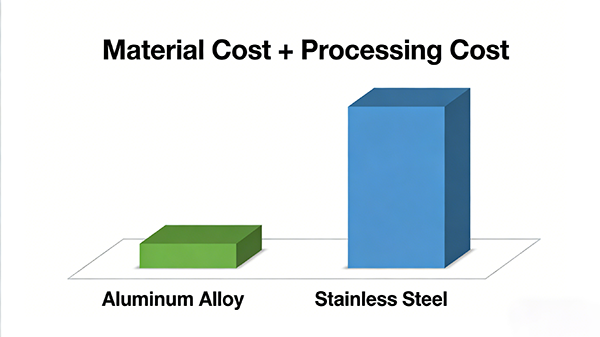
Here’s something most guides won’t tell you: switching from stainless to aluminum can cut your total cost by 40–60% on many parts.
Why? Faster machining, longer tool life, cheaper material. If your application doesn’t need stainless properties, you’re paying for capability you’ll never use.
But if you need stainless and spec aluminum instead? That’s how parts fail in the field. Corrosion. Cracking. Premature wear.
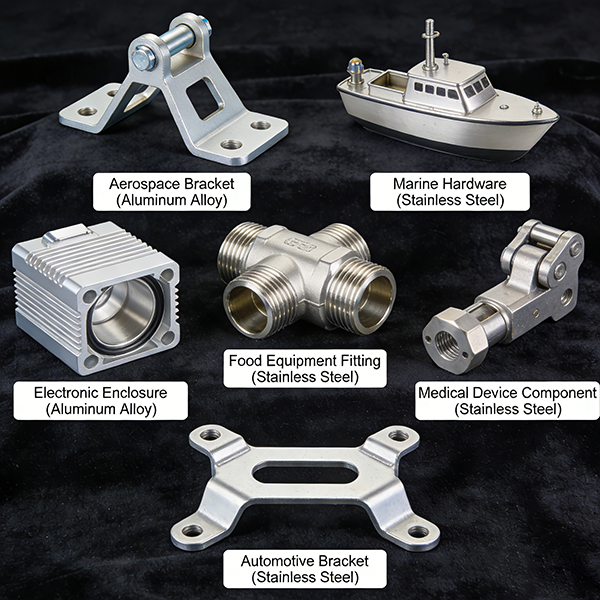
Real Applications We See Every Day
| Application | Our Recommendation | Why |
|---|---|---|
| Aerospace bracket | Aluminum 7075 | Strength + weight savings critical |
| Marine deck hardware | Stainless 316 | Saltwater corrosion resistance |
| Food processing equipment | Stainless 304/316 | Sanitary, easy to clean |
| Electronics enclosure | Aluminum 6061 | Heat dissipation + light weight |
| Medical instrument | Stainless 316L | Biocompatible, sterilization-capable |
| Automotive bracket (under hood) | Stainless | Heat exposure + durability |
| Consumer product housing | Aluminum | Cost + finish options |
Common Mistakes I See (And How to Avoid Them)
Mistake 1: Over-specifying stainless
Designing a 316 stainless part for an indoor, dry environment where aluminum would work perfectly. You’re paying 2–3× more than necessary.
Mistake 2: Ignoring galvanic corrosion
Bolting aluminum and stainless together in wet environments without isolation. The aluminum becomes the sacrificial anode and corrodes rapidly. Use nylon washers or choose matching materials.
Mistake 3: Sharp internal corners in stainless
Designing zero-radius corners that require impossible tool paths. Let us know what you need—we’ll tell you what’s practical.
Mistake 4: Anodizing the wrong alloy
Trying to get decorative anodized finishes on high-silicon cast aluminum. Stick to 6000 or 7000 series for consistent results.
Mistake 5: Assuming all stainless is non-magnetic
Specifying 304 stainless for a magnetic sensor mount. Use 400-series if magnetism is required.
The Bottom Line
There’s no universal “right” answer between aluminum and stainless. It depends entirely on what your part needs to do.
Aluminum is your go-to for: Light weight, heat dissipation, lower cost, and applications where extreme strength isn’t required.
Stainless is your choice for: Harsh environments, high strength requirements, food/medical applications, and long-term durability.
The best part? Whichever you choose, experienced CNC machining services can make it happen. The key is matching the material to the application—not the other way around.
Let's Talk About Your Project
Still not sure which material is right for your parts? I’m happy to take a look.
10+ years machining both materials. I’ve seen what works, what fails, and where you can save money without sacrificing performance. Whether you need aluminum or stainless, we’ve got the experience to get it right.
Get in touch. Send us your drawings. We’ll give you honest feedback on material choice, manufacturability, and cost. We reply within 24 hours.